It moves the oceans
Lunar gravity is the main driver of Earth's ocean tides, and with them the coastal ecosystems, feeding cycles and navigation patterns that life on Earth has adapted to over millions of years.
ExplOrbit Conservation — Public Brief
The Moon is not a blank surface waiting to be used. It moves our oceans, steadies our planet, and holds a record of the solar system that exists nowhere else. As lunar activity accelerates, conservation of the Moon has to keep pace with access to it. ExplOrbit is a novelty space-themed gift company, and our contribution to that conservation is education and public awareness.
Section 01
Long before the Moon became a destination for exploration, it was an essential part of the story of Earth. Our only natural satellite helps create ocean tides, steadies the wobble of our axis, and preserves an extraordinary record of the history of our solar system. With little erosion to erase its ancient surface, the craters, rocks and ice deposits of the Moon hold evidence spanning billions of years.
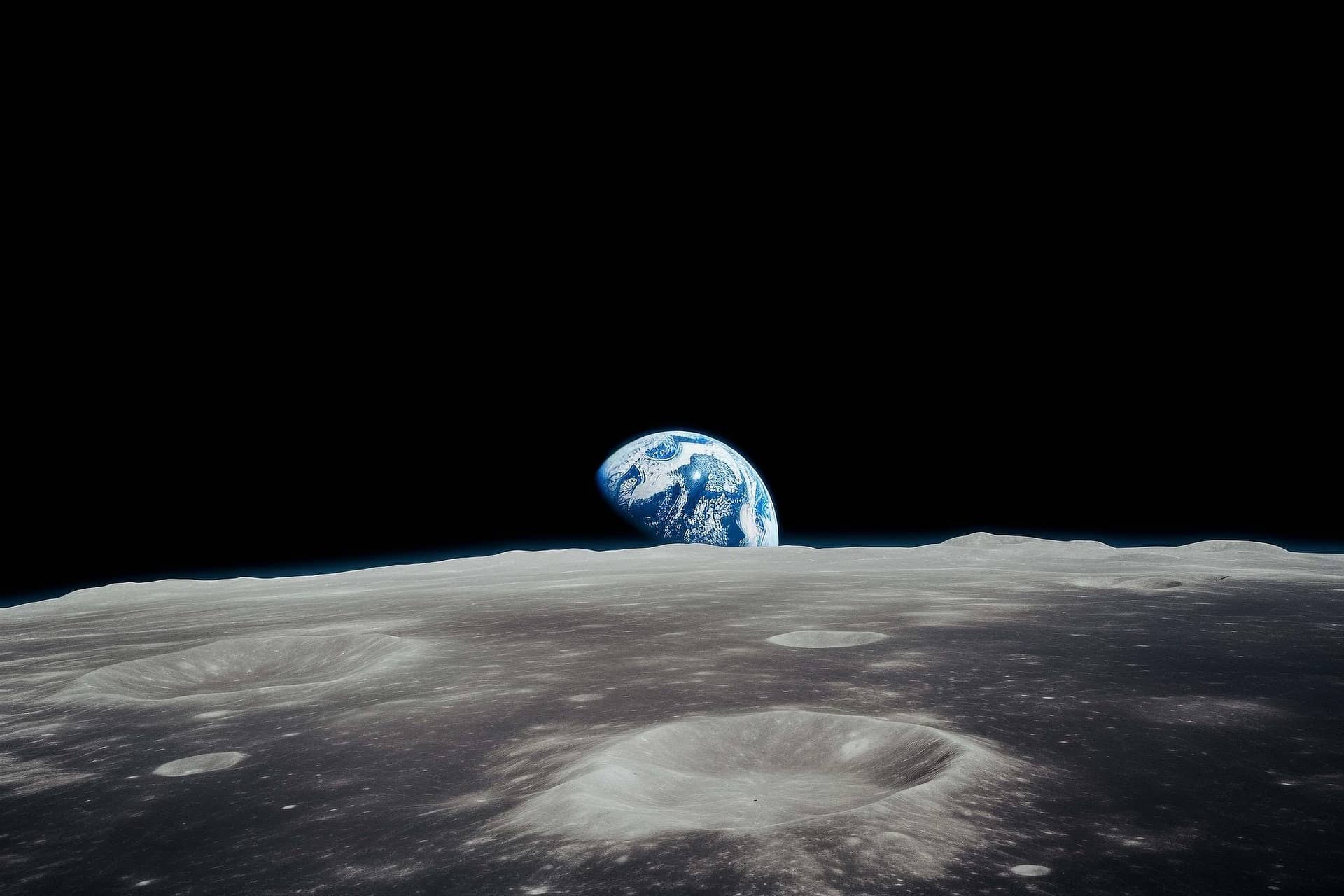
Lunar gravity is the main driver of Earth's ocean tides, and with them the coastal ecosystems, feeding cycles and navigation patterns that life on Earth has adapted to over millions of years.
Our only natural satellite helps limit the wobble of Earth's axis. That steadiness is part of why our seasons stay predictable enough to farm, plan and live around.
With almost no weather or erosion to erase its surface, the Moon's craters, rocks and ice deposits preserve a physical record of solar-system history spanning billions of years.

Nothing on the Moon heals. A track, a scar or a spill stays legible for millions of years, which is exactly why prevention matters more there than remediation.
Section 02
As government, scientific and commercial activity around the Moon increases, humanity faces an important responsibility: exploration must be accompanied by care. Spacecraft debris, discarded equipment, surface disturbance, dust displacement, contamination and interference with scientifically or historically valuable locations are legitimate sustainability concerns. NASA is already supporting research into responsible use of the Moon, including the protection of valuable locations and human heritage sites.
Impacted stages, crashed landers and fragments accumulate on a surface with no process to clear them.
Hardware left behind after a mission ends stays exactly where it was abandoned, indefinitely.
Landing scars, rover tracks and excavation alter ground that has been undisturbed for billions of years.
Descent engines throw regolith at high speed with no atmosphere to slow it, carrying it far beyond the landing site.
Introduced chemicals, propellant residue and biological material can compromise the very samples science needs.
Locations of scientific and human significance can be damaged by activity nearby, not only activity on top of them.
Section 03
The international community has also recognised this responsibility. The Outer Space Treaty calls upon participating nations to act with due regard for the interests of others and to avoid harmful contamination of the Moon and other celestial bodies. United Nations sustainability guidelines further encourage international cooperation, responsible operations, improved sharing of space-object information, debris-risk reduction and greater public awareness.
No nation may claim sovereignty over the Moon. That is precisely why its conservation cannot rest on ownership. It has to be carried by attention, by transparency, and by the ordinary expectation that whoever goes there leaves it worth studying.
Section 04
ExplOrbit is a novelty space-themed company offering commemorative gift packages. We do not convey legal ownership of the Moon, exercise regulatory authority or represent a government space agency. Our conservation contribution is education and public awareness, and we would rather state that plainly than dress it up.
Section 05
Through factual briefs, thoughtful editorials and written literature, ExplOrbit encourages greater attention to Moon conservation, responsible space exploration, transparency, debris prevention and respect for places of scientific, environmental and cultural importance. We believe a gift can be imaginative and enjoyable while still carrying a meaningful message.
ExplOrbit asks individuals, companies, agencies and future explorers to remember one guiding principle.
Access to the Moon should always be matched by responsibility toward it.
Discovery should not become disregard.
Innovation should not outpace accountability.
Commercial opportunity should not diminish the shared scientific, cultural and environmental value of the Moon.
Protecting the Moon begins before irreversible harm occurs. It begins with awareness, transparency, thoughtful planning and respect. The contribution of ExplOrbit is to keep that conversation visible, understandable and human.
We care about the Moon, and we invite others to care with us.
Section 06
The conservation concerns described above are drawn from published material by NASA and the United Nations. We link to them directly so anyone can check the claims for themselves.
ExplOrbit is not affiliated with, endorsed by or acting on behalf of NASA, the United Nations or any government space agency. These references are provided for public education only. See our terms and legal notice for the full statement of what an ExplOrbit certificate is.
Every ExplOrbit gift package carries this message to one more person. Choose a conservation territory, personalise the certificate, and put the Moon in front of someone who has never thought about protecting it.
