Gift Guide — Stargazers and astronomy lovers
The astronomy gift they can find in the night sky
The best gift for a stargazer is one they can actually observe. The ExplOrbit Galaxy Gift Package records a named territory on the side of the Moon that faces Earth, with its selenographic latitude and longitude printed on a personalized Certificate of Stewardship and a Moon map showing where it lies. Point binoculars or a backyard telescope at the right region and they are looking at the place their gift describes.
Free standard shipping in the US.
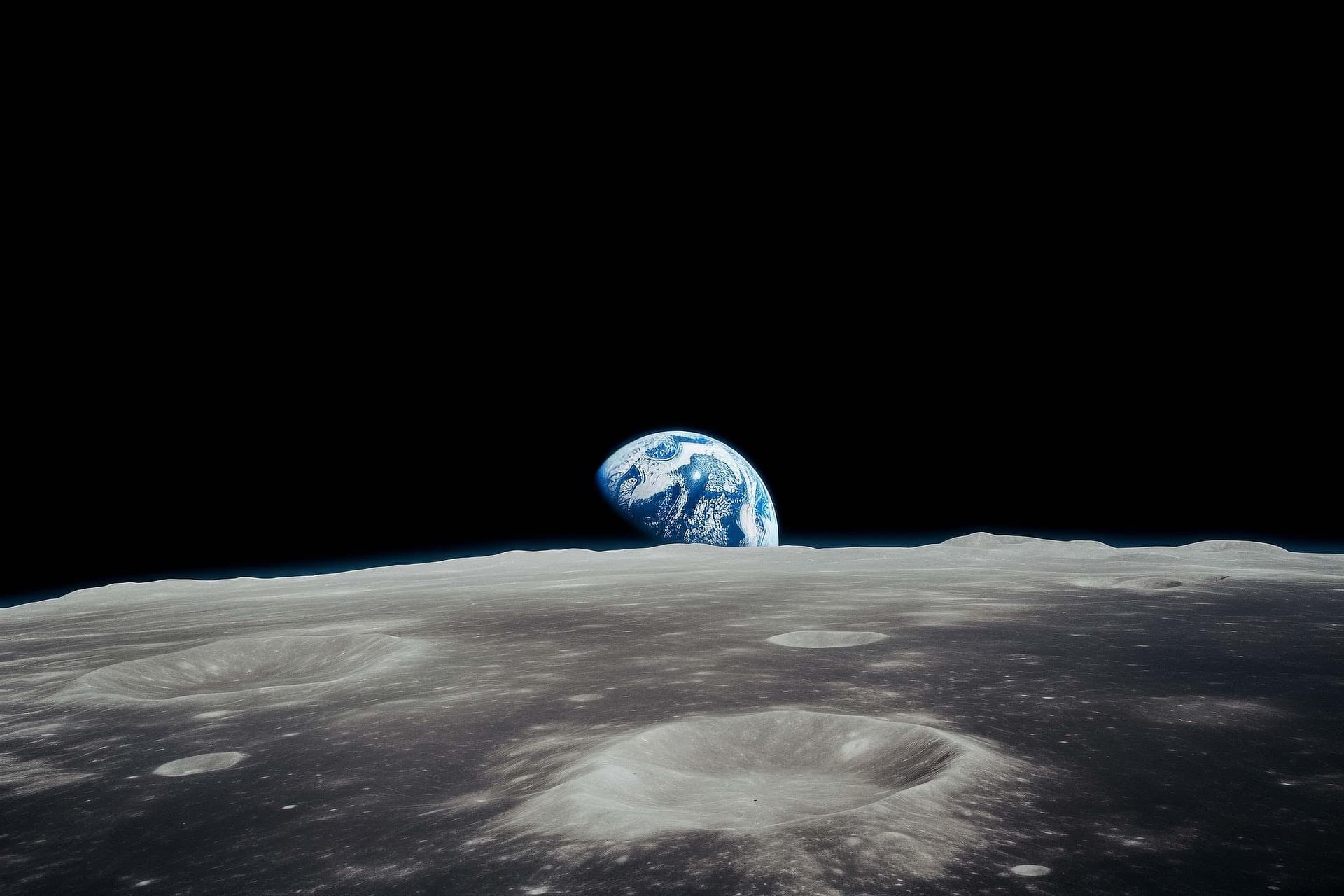
A gift with coordinates you can actually observe
Astronomers locate features on the Moon with selenographic coordinates, the lunar equivalent of latitude and longitude. Every ExplOrbit territory is recorded this way, in regions visible from Earth, such as the great dark seas of Mare Tranquillitatis, Mare Serenitatis and Mare Imbrium.
The dark maria are visible to the naked eye. A pair of 10x50 binoculars brings out crater rims and mountain ranges, and even a small telescope shows individual craters in sharp relief. The territory itself is far too small to resolve from about 239,000 miles away, as is anything a few acres across, but the region it sits in is unmistakable once you know where to look.
The best nights for Moon watching
Experienced observers rarely wait for the full Moon. Around first quarter and last quarter the line between day and night, called the terminator, throws long shadows across craters and mountains, and the surface looks almost three dimensional. A full Moon is bright and beautiful, but flat.
Other moments worth planning for include earthshine, the faint glow on the dark part of a thin crescent that is sunlight reflected off Earth; lunar eclipses, when the full Moon turns copper red; and International Observe the Moon Night, an annual public event held each autumn when astronomy clubs around the world set up telescopes for anyone who wants a look.
For planet lovers and solar system fans
The Moon is the only other world people have walked on, and it is the doorway to the rest of the solar system for most new astronomers. It also travels through the same band of sky as the planets, so it regularly passes close to Venus, Mars, Jupiter or Saturn in what astronomers call a conjunction. Those evenings are a lovely chance to point out a gifted territory and a planet in the same view.
For the planet lover who reads every mission update, the certificate is a small, personal connection to the one world beyond Earth that we have already visited, and are now preparing to visit again.
Gift ideas
Ideas for the astronomy lover in your life
The backyard telescope owner
They already know the Moon by heart. Now there is a recorded place on it with their name, to show visitors through the eyepiece.
The astrophotographer
A new target for their next session: photograph the region of their territory and frame the print beside the certificate.
The casual stargazer
No equipment needed. The included Moon map turns any clear evening into a short, rewarding look up.
The astronomy club member
A conversation starter for the next star party, and a gift that respects real observing rather than gimmicks.
The planet and space news follower
A personal link to the world that every new Moon mission is heading back to.
Someone who was once given a star name
Star names cannot be pointed to. This territory can, and the certificate is upfront about exactly what it is.
The ExplOrbit Galaxy Gift Package
One gift box, everything included
- One children's activity color poster, 16 x 24 inches, rolled for safe keeping
- One ExplOrbit Moon Map, charting the near side in detail
- One ExplOrbit Moon Passport Booklet, stamped for the journey ahead
- One Collectible ExplOrbit Certificate of Stewardship, personalised and recording the coordinates of your territory as your pledge of stewardship for land on the Moon
- One ExplOrbit Moon Facts Flyer, packed with bite-sized lunar science
$129.00 for everything, with free standard shipping in the US and nothing else to buy.
A commemorative collectible and conservation pledge, not a claim of ownership. Is Moon land real?
Common questions
Straight answers
- What is a good gift for someone who loves astronomy?
- Something they can use under the sky. A personalized ExplOrbit Moon certificate records a named territory with real selenographic coordinates on the Earth-facing side of the Moon, and the gift package includes a Moon map so they can find its region with the naked eye, binoculars or a telescope.
- Can you see your Moon territory with a telescope?
- You can see the region it sits in. Territories are recorded by selenographic latitude and longitude on the side of the Moon that faces Earth, and the included Moon map shows where they are. The large dark seas are visible to the naked eye and binoculars show far more detail, but a parcel a few acres across is too small to resolve from about 239,000 miles away.
- When is the best time to look at the Moon?
- Around first quarter and last quarter. At those phases the shadows along the terminator, the line between lunar day and night, make craters and mountains stand out in strong relief. The full Moon is bright but looks flat because sunlight falls straight onto the surface.
- Is an ExplOrbit certificate better than naming a star?
- It is different in two useful ways. Star names sold online are not recognized by astronomers, and the star itself is usually too faint to find. An ExplOrbit territory is recorded at real coordinates on the Moon, in a region anyone can see, and the certificate states plainly that it is a commemorative collectible and conservation pledge rather than ownership.
More gift ideas
Shopping for someone else?
Christmas & Holiday Gifts
A one-of-a-kind present for Christmas, Hanukkah, Kwanzaa, New Year and every celebration that follows the Moon.
Read the gift guideSpace Gifts for Kids & Students
An educational space gift that turns curiosity into a habit, from little explorers to college science students.
Read the gift guideGifts for Scientists, Teachers & STEM Fans
For teachers, researchers and science lovers: a gift built on real selenography and honest science.
Read the gift guideGifts for Rockhounds & Meteorite Fans
For rock collectors, geology lovers and meteorite fans: the story of the Moon’s ancient rocks, and a named place among them.
Read the gift guideGifts for Space & NASA Mission Fans
For fans of Apollo, Artemis and every launch: a recorded territory in the regions astronauts explored.
Read the gift guideMoon Dedications & Special Occasions
Birthdays, anniversaries, weddings, new babies, graduations and memorials, dedicated in your own words.
Read the gift guide
